Watch Aimé Césaire, Un homme une terre (1976) Online Free
Alternating interview segments, shots of Martinique landscapes and scenes from Aimé Césaire's play La Tragédie du roi Christophe (1963), Sarah Maldoror portrays her friend as a politician, a poet, and a founder of the Négritude movement.
Cast
Aimé Césaire, Sarah Maldoror, Douta Seck
More Like This
Politzek, the voices that challenge the Kremlin
In Russia, criticizing the war in Ukraine or Vladimir Putin’s regime has become a crime. Thousands of ordinary citizens are being arrested, tried, and imprisoned. They are called “Politzek”: political prisoners. Filmed clandestinely over the course of more than a year, Politzek gives a platform to those who, despite the fear, continue to speak out against Putin’s repressive Russia. Through the intersecting stories of a teenager sentenced to five years in prison for criticizing the government on social media, a young artist jailed for placing anti-war stickers, a human rights activist, and two theater directors facing Kafkaesque trials, the film unveils the machinery of state repression in Russia. With rare footage, broken yet unyielding voices, this is a story of silenced resistance.
2026
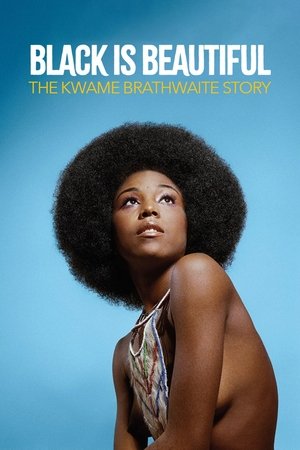
Black Is Beautiful: The Kwame Brathwaite Story
Everyone knows the phrase “Black is Beautiful,” but few know of the man who helped popularize it. Little known Harlem based photographer - freedom fighter and activist - Kwame Brathwaite took 500,000 photos across his 70-year career, always devoted to celebrating the joy and beauty of African American life. This feature documentary tells the story of Kwame and the “Black is Beautiful” movement.
2025
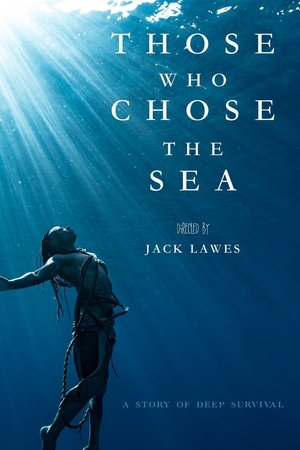
Those who Choose the Sea
Inspired by the powerful true story of the Igbo Landing of 1803, where a group of enslaved Africans chose the ocean over slavery. This poetic film follows African freediver Tatiana Mendes as she confronts her own inner turmoil beneath the surface. Through the discipline of freediving, she dives into more than just water. She descends into inherited trauma, ancestral memory, and the quiet violence of modern life.
2025

Mikelande: L'exil, la mémoire et le griot
Exiled after Haiti’s political struggles of the 90s, Mikerlande—a former activist and now entrepreneur—rekindles memories of resilience and commitment. Through griot, she shares a story of struggle, legacy, and strength, bridging past and present to preserve her heritage.
2025
Mot vinden
2025

At All Kosts
An acting ensemble rehearses for an upcoming theater festival. They rig up stage scenery and practice dialogue and set pieces in the middle of a residential area. But this is no ordinary theater setting, as evidenced by the armed guards at the entrance. Festival 4 Chemins is taking place in Port-au-Prince, the capital of Haiti. Gangs are active in the city; you can hear machine-gun fire in the distance.
2025

The Guest
In 2021, the border area between Poland and Belarus became a forbidden zone, three kilometers wide, where refugees found themselves brutally trapped. They had become the stakes in a political game: Belarus supposedly guaranteed free passage to the EU, but in Poland the refugees met with pushbacks, forcing them back across the border. Once in Belarus again, they were driven back towards Poland—a horrific stalemate in an inhospitable landscape of treacherous marshes.
2024

1798 - Revolta dos Búzios
One of the most important events in Brazilian history, the Búzios Revolt of 1798 was led by dozens of black men who rose up to overthrow the colonial government, proclaim independence and establish a democratic Republic, free from slavery. The boldness of these men called on the people to make the Revolution and the conspiracy spread to the city of Bahia. The seizure of power is near. But the movement is denounced, the government sets up a Devassa against hundreds of people and four of them are hanged and quartered.
2024
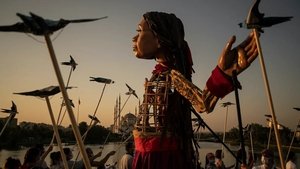
The Walk
Asil is a young Syrian refugee awaiting documents in Turkey while processing the trauma of losing her home and family. Her story gives voice to a charming gigantic puppet named Amal, who represents millions of migrant and displaced children in a walk from the Syrian border in Turkey all the way across Europe. Escorted and animated by a group of puppeteers who are themselves refugees, Amal’s epic journey is one of compassion and discovery.
2023
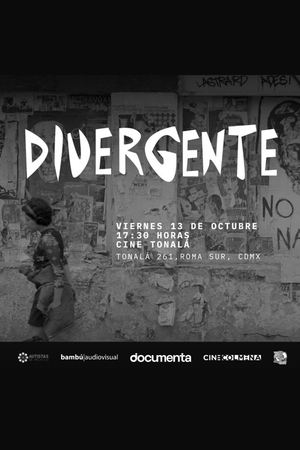
Divergente
2023

Who We Are: A Chronicle of Racism in America
Jeffery Robinson's talk on the history of U.S. anti-Black racism, with archival footage and interviews.
2022
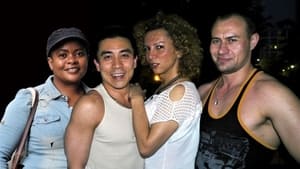
Re-Births
A documentary film depicting five intimate portraits of migrants who fled their country of origin to seek refuge in France and find a space of freedom where they can fully experience their sexuality and their sexual identity: Giovanna, woman transgender of Colombian origin, Roman, Russian transgender man, Cate, Ugandan lesbian mother, Yi Chen, young Chinese gay man…
2017
69 Minutes of 86 Days
A 3-year-old girl and her family's long journey from a Greek refugee centre to Uppsala.
2017
The Salt of the Earth
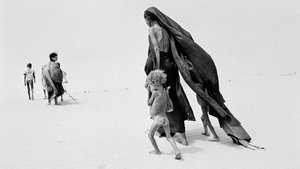
During the last forty years, the photographer Sebastião Salgado has been travelling through the continents, in the footsteps of an ever-changing humanity. He has witnessed the major events of our recent history: international conflicts, starvations and exodus… He is now embarking on the discovery of pristine territories, of the wild fauna and flora, of grandiose landscapes: a huge photographic project which is a tribute to the planet's beauty. Salgado's life and work are revealed to us by his son, Juliano, who went with him during his last journeys, and by Wim Wenders, a photographer himself.
2014

Dandara: Enquanto Morar for um Privilégio, Ocupar é um Direito
2013
Papa Césaire
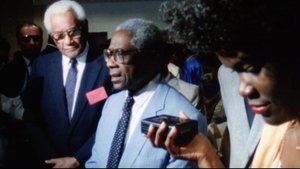
Shortly after his death in 2008, Maldoror made this film about her longtime friend and collaborator, the Négritude poet Aimé Césaire. In this film, she retraces the steps of Césaire’s travels across the globe — particularly back to his hometown in Martinique, where Maldoror interviews his relatives about his life — and her working relationship with Césaire, including fragments of her previous films about him, Un homme, une terre (1976) and Le masque des mots (1987).
2009
Crimes of Honour
Throughout the Islamic world, each year hundreds of women are shot, stabbed, strangled or burned to death by male relatives because they are thought to have “dishonoured” their families. They may have lost their virginity, refused an arranged marriage or left an abusive husband. Even if a woman is raped or merely the victim of gossip, she must pay the price. Crimes of Honour documents the terrible reality of femicide – the belief that a girl’s body is the property of the family, and any suggestion of sexual impropriety must be cleansed with her blood. We meet women in hiding from their families, a brother who describes his reasons for killing the sister he loved, and a handful of women who have committed themselves to the protection of young women in danger of losing their lives.
1999
The Pan-african Festival in Algiers
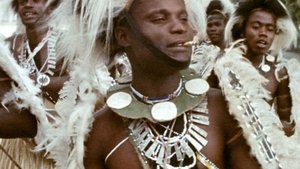
Festival panafricain d'Alger is a documentary by William Klein of the music and dance festival held 40 years ago in the streets and in venues all across Algiers. Klein follows the preparations, the rehearsals, the concerts… He blends images of interviews made to writers and advocates of the freedom movements with stock images, thus allowing him to touch on such matters as colonialism, neocolonialism, colonial exploitation, the struggles and battles of the revolutionary movements for Independence.
1969

Algeria, Year Zero
Documentary on the beginnings of Algerian independence filmed during the summer of 1962 in Algiers. The film was banned in France and Algeria but won the Grand Prize at the Leipzig International Film Festival in 1965. Out of friendship, the production company Images de France sent an operator, Bruno Muel, who later declared: "For those who were called to Algeria (for me, 1956-58), participating in a film on independence was a victory over horror, lies and absurdity. It was also the beginning of my commitment to the cinema."
1965
Echo in the Desert
In the vastness of the Iranian desert, young artists strive for freedom, community, and the preservation of their cultural heritage in the ancient caravanserai of Deyr-e Gachin, while facing the harsh conditions of their surroundings.