Watch A Train Arrives at the Station (2016) Online Free
Created from material developed during "The Thoughts That Once We Had," this short film presents an anthology of 26 scenes from films made between 1904 and 2015, each depicting trains arriving at stations. The sequences are arranged in a serial structure, with black-and-white scenes in the first half paired with corresponding color sequences in the second half, forming a symmetrical visual progression.
More Like This
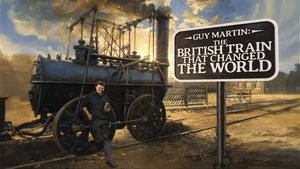
Guy Martin: The British Train That Changed the World
Celebrating 200 years of rail, Guy helps to rebuild, and learns to drive, the world’s most important train for a recreation of the journey that changed history: the Stockton to Darlington Railway
2025
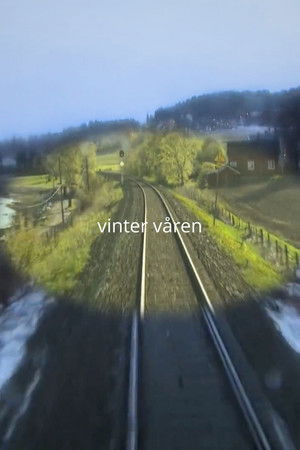
Winter Spring
A train moves through winter as a superimposed image of the same route in spring gradually emerges. Both moments coexist within a single frame, revealing two seasons happening at once.
2024
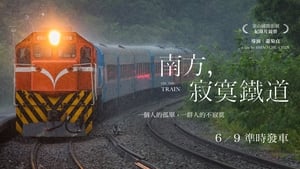
On the Train
On the Train captures from the birth to the last moment of the railway, 98.2 kilometers long and opened in 1992, crossing southern Taiwan.
2023
Estação Metropolitana
Between one carriage and another, passengers tell their stories over a train journey.
2022

Grid
A ritual of grids, reflections and chasms; a complete state of entropy; a space that devours itself; a vertigo that destroys the gravity of the Earth; a trap that captures us inside the voids of the screen of light: «That blank arena wherein converge at once the hundred spaces» (Hollis Frampton).
2021

All Aboard! New Zealand by Rail, Sea and Land
Take an epic overland train, boat and car journey through New Zealand’s breathtaking landscapes. The voyage begins in Auckland, but the city soon gives way to rolling pastures, volcanic extremes, tranquil waterways, the snowcapped grandeur of the Southern Alps and the beauty of Fiordland.
2020

Faces Places
Director Agnès Varda and photographer/muralist JR journey through rural France and form an unlikely friendship.
2017
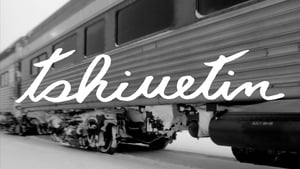
Tshiuetin
Take a breathtaking train a ride through Nothern Quebec and Labrador on Canada’s first First Nations-owned railway. Come for the celebration of the power of independence, the crucial importance of aboriginal owned businesses and stay for the beauty of the northern landscape.
2016
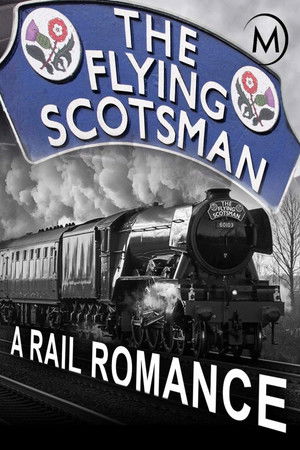
The Flying Scotsman: A Rail Romance
Built in 1923, the Flying Scotsman was the first steam locomotive to run at 100 miles an hour and to star in its own feature film. This is the untold story of the iconic Flying Scotsman-the very best in the engineering of its time.
2013
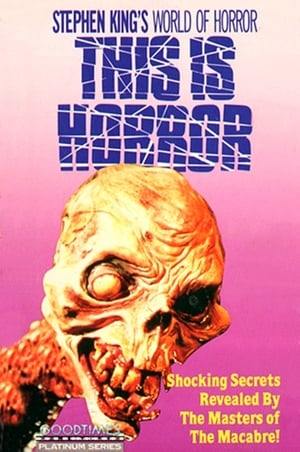
Stephen King's World of Horror
This horror documentary is not the same as the 1986 TV special Stephen King's World of Horror nor the 1988 VHS release of the same name, which runs 45 minutes, was distributed by Front Row Entertainment and is about King himself. Instead, This Is Horror (copyright 1989) was a TV special which ran in four 60 minute increments. This new special used some framing footage from the original 'World of Horror' but is primarily newer interviews and behind-the-scenes footage about what was hot in horror in the late 80s. Here in the U.S., a condensed 90-minute version made its way onto video courtesy of Goodtimes in 1990. Elsewhere, the entire special was released as 2 different tapes running 90 minutes apiece. In the UK these were titled This is Horror: A Video Encyclopedia of Horror (Volumes 1 and 2) and in Germany they were called Best of Stephen King's World of Horror (Parts 1 & 2).
1989
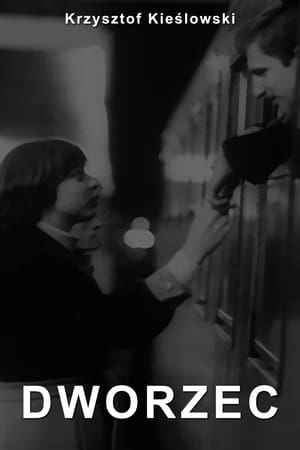
Railway Station
Warsaw's Central Railway Station. 'Someone has fallen asleep, someone's waiting for somebody else. Maybe they'll come, maybe they won't. The film is about people looking for something.
1980

Canadian Pacific II
Canadian Pacific II is designed as a companion piece to Canadian Pacific I. Shot from a window two storeys higher and in the building adjacent to the artists’s studio of the previous year, one enters into a dream state… an involvement with a vocabulary of seeing and feeling by subtle transitions of the passage of time
1975
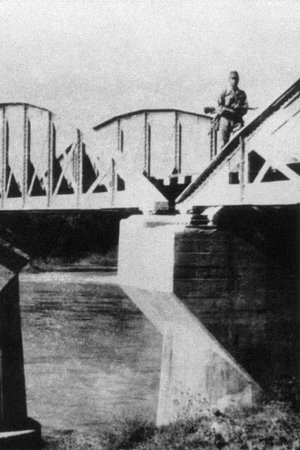
Kwaï
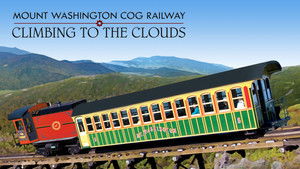
Mt. Washington Cog Railway: Climbing to the Clouds
Climb aboard the historic Cog Railway for a trip up New England's highest peak on the first mountain climbing train.
2015
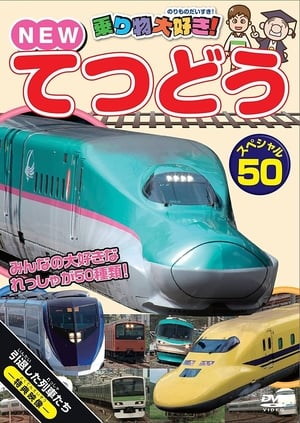
Norimono Daisuki! New Tetsudou Special 50
"Tetsudou" version of the series full of popular vehicles for children. Fifty kinds of trains selected from the railway active in Japan such as Shinkansen, SL (steam locomotive), limited express, etc. are recorded with powerful images. Introducing a nostalgic train that is not running now as a bonus picture.
2012
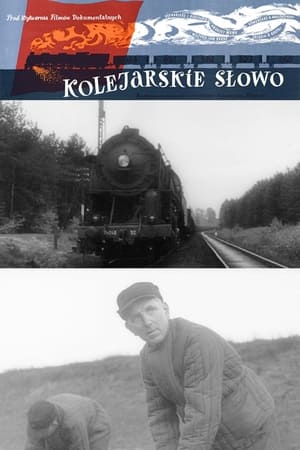
A Railwayman's Word
A documentary about the hard work of railwaymen transporting coke from Tarnowskie Góry to Szczecin Iron works.
1953
Some of the Best
This film features highlights of MGM's productions from 1924 through 1943, in honor of the studio's twentieth anniversary.
1944
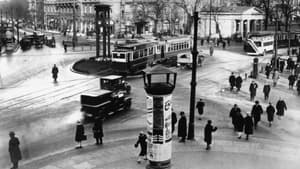
Berlin: Symphony of a Great City
A day in the city of Berlin, which experienced an industrial boom in the 1920s, and still provides an insight into the living and working conditions at that time. Germany had just recovered a little from the worst consequences of the First World War, the great economic crisis was still a few years away and Hitler was not yet an issue at the time.
1927

Train Entering Hove Station
Most movie fans know that the first filmmakers liked to shoot trains entering stations. This example by Sussex film pioneer George Albert Smith illustrates why. The train's rush towards the audience brings movement and visual drama. The flurry of human activity offers plenty for the audience to engage with - who are these people and where are they going? And the time pressure exerted by the fact that the train must soon depart adds narrative tension - will everyone get on and off in time?
1897

Amtrak: The First 40 Years 1971-2011
America's Railroad℠ marks 40 years of service with this exclusive look inside the company. From the making and building of Amtrak to its plans for the future, this is the definitive story.