Watch A Lonely Woman in a Lonely Land (1953) Online Free
Loading Cinehub...
Onna Hitori Daichi wo Yuku (A Lonely Woman in a Lonely Land, Kinuta Production, 1953) was the second feature film directed by Kamei Fumio, who is known as a master of documentary films, and followed his “Haha Nareba Onna Nareba(Become a Mother, Become a Woman)” (1952).
Cast
Isuzu Yamada, Jūkichi Uno, Junkichi Orimoto, Taketoshi Naitō, Isao Numasaki, Yoshi Katō, Eiji Nakamura, Tanie Kitabayashi, Hatae Kishi, Keiichiro Shimada, Ryoko Sakurai, Masao Mishima
More Like This
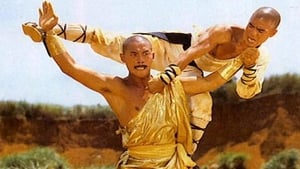
Shaolin vs. Lama
A kung fu fanatic, Yu Ting (Alexander Lo Rei), searching for the ultimate master, saves a young Shaolin monk, Hsu Shi (William Yen), from a group of mobsters and sees it as a golden opportunity to enrich his kung fu skills. He persuades the young novice monk to smuggle him into Shaolin, but Ting's presence isn't welcome and he is driven out, but remains close to the temple, keeping in touch with Hsu Shi. When Ting rescues a girl from the clutches of the Flying Eagle gang, the Golden Wheel Lama and sworn enemy of Shaolin finds the perfect excuse to lead an assault on the Temple. Realizing Ting's devotion, the abbot decides to bring Ting into the Shaolin order and teach him the deadliest techniques to prepare him for the Lama's merciless fury.
1983
The Blood Road
Yugoslav Partizans, captured by Nazis, are sent to concentration camps in distant Norway. The local population help some Partizans survive or flee to neutral Sweden.
1955
The Love of a Woman
Marie, a young doctor, settles down on the Ouessant Island. She will be able to win the diffidence of the local population but she will have to fight for her independence after falling in love with an Italian engineer.
1953

Thérèse Raquin
Star-crossed lovers Thérèse and Laurent think they've gotten away with murder after Thérèse's weakling husband "falls" from a speeding train. But when forced to contend with a blackmailer's demands and the mute accusations of Thérèse's mother-in-law, it's only a matter of time before the law, their passion or blind chance trips them up.
1953
Three Girls from Rome
Three gorgeous seamstresses meet on the historic steps of the Piazza de Spagna in Rome to discuss one another's love lives.
1952
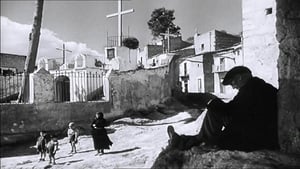
The Path of Hope
The story of a group of Sicilian miners and their families decide to illegally cross the border to France and their hardships.
1950
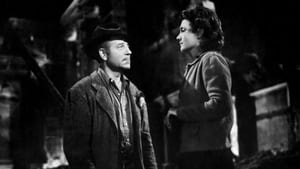
The Walls of Malapaga
A French fugitive arrives in Genoa, where he becomes entangled with an Italian woman and her daughter.
1949
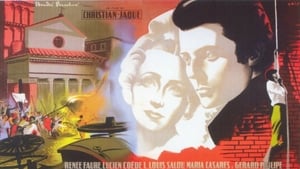
The Charterhouse of Parma
This adaptation of Stendhal's timeless masterpiece of French literature tells the tale of Fabrice Del Dongo (Grard Philipe) a young archibishop who gives his heart and soul to romance rather than to the Church creating upheaval in the lives of evergone around him the Countess of Sanseverine (Maria Casares) is but one of the may women who love him. In turn she incurs jealous retributions from those in high places who desire her. For his crimes Fabrice is thrown in Prison where from Crimes Fabrice is thrown in prison where form his lonely window he falls in love with his jailer s daughter and plans a daring escape she however calls his plan insane and takes a vow to the Virgin Mary to never see him again ever if his escape succeeds the Charterhouse of Parma explodes with conflicting desires man s desire form God vs. his desire for romance.
1948
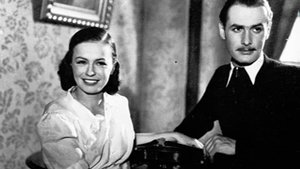
Forbidden Songs
Set during the German occupation of Warsaw during WWII, this musical tells the story of several inhabitants of the same tenement house.
1947
Carmen
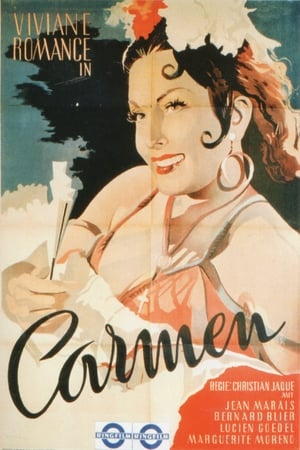
Carmen is a French-Italian musical drama film directed by Christian-Jaque and starring Viviane Romance, Jean Marais, and Lucien Coëdel. It is a version of the famous opera. It was filmed in two versions, French and Italian, with the same screen cast but some different crew, and with Italian voices dubbed in on the Italian version, which have been munged together at IMDb. A third version, with English dubbed under the direction of British actor Noel Howlett, was made subsequently using one of the two (French or Italian) originals for the visual source.
1944
Maria Candelaria
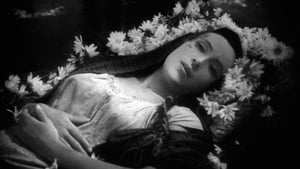
A young journalist asks an old artist about the portrait of a naked Indian woman that he has in his study. The artist tells the story of Maria Candelaria, a young Indian woman who was rejected by her own people for being the daughter of a prostitute. She is protected by a young Indian man, Lorenzo Rafael, who has fallen in love with her.
1944
The Men in Her Life
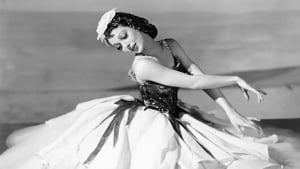
A circus performer becomes a ballerina and then begins her life of a career versus marriage and a home-life. She marries her first husband, her mentor and instructor, primarily out of gratitude. After his death, she marries an American thinking that can be her escape from the world of ballet. But she leaves him to return the dancing. She has a child but does not tell her husband. When her daughter is two-years-old, the husband finds out and takes the child to America. The ballerina continues to dance until her best dancing days have gone by.
1941
The King's Jester
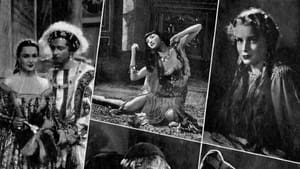
Based on a Victor Hugo play, and scored with music from the later opera by Giuseppe Verdi, the film tells about a hunchbacked clown whose beautiful daughter falls in love with the lecherous king.
1941
Die Frau ohne Vergangenheit
1939
The Dream of Butterfly
Italian filmmaker Carmine Gallone was still in his "operetta" mode when he helmed 1938's Il Sogno di Butterfly (Dream of the Butterfly) Maria Cebotari plays opera diva Rosa Belloni, currently starring in a production of Puccini's Madama Butterfly. The plot thickens when Rosa's backstage life begins to mirror the travails of the character she is portraying. The climax comes when Harry Peters (Fosco Giachetti), the American father of Rosa's illegitimate child, returns after four years with his new wife in tow, leading inexorably to a doleful ending both on- and offstage. Critics complained about the substandard photography in Il Sogno di Butterfly, but this might have been due to poor laboratory work.
1939

The Great Waltz
Composer Johann Strauss risks his marriage over his infatuation with a beautiful singer.
1938
In Old Chicago
The O'Leary brothers -- honest Jack and roguish Dion -- become powerful figures, and eventually rivals, in Chicago on the eve of its Great Fire.
1938

Mad About Music
A young woman at a girl's school in Switzerland makes up stories about and writes herself letters from an imaginary explorer-adventurer father; and is eventually put in a position where she has to produce him. Interesting things happen as she talks a visiting Englishman into helping her out.
1938
The Story of Louis Pasteur
A true story about Louis Pasteur, who revolutionized medicine by proving that much disease is caused by microbes, that sanitation is paramount and that at least some diseases can be cured by vaccinations.
1936
Les Misérables
In 19th century France, Jean Valjean, a man imprisoned for stealing bread, must flee a relentless policeman named Javert. The pursuit consumes both men's lives, and soon Valjean finds himself in the midst of the student revolutions in France.
1934