Watch A Forbidden Orange (2021) Online Free
Spain, 1970s. A Clockwork Orange, a film considered by critics and audiences as one of the best works in the history of cinema, directed by Stanley Kubrick and released in 1971, was banned by the strict Franco government. However, the film was finally premiered, without going through censorship, during the 20th edition of the Seminci, the Valladolid Film Festival, on April 24, 1975. How was this possible?
Cast
Malcolm McDowell, Carmelo Romero, Vicente Molina Foix, Gustavo Martín Garzo, María Calleja, Fernando Herrero, Jesús Ojeda, José Miguel Ortega, María Aurora Viloria, Pedro del Río, Paco Gratacós, Teresa Blanco
More Like This

Kathryn Bigelow: Hollywood Adrenaline
For more than 40 years Kathryn Bigelow has been making films that explore male violence. With movies like Blue Steel, Point Break, The Hurt Locker and Zero Dark Thirty, the Oscar winning American filmmaker has impressed with hard-hitting moviemaking that holds a mirror up to contemporary America and the world.
2023

Margalida
The emotional journey of Margalida Bover, who was the lover of the anarchist militant Salvador Puig Antich, convicted of murder and executed by Franco's regime in 1974.
2022
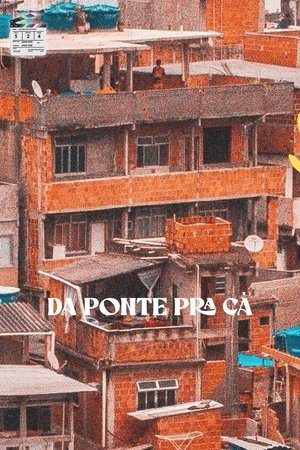
Da Ponte Pra Cá
2022
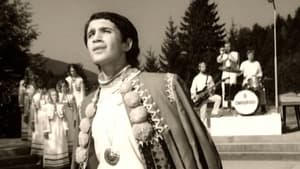
Mustache Funk
The early 70s is a golden epoch of our popular music. Hundreds of songs of exquisite beauty. Groundbreaking sound. Futuristic suits. How and whence could all of this emerge in a Soviet socialist republic? How did a brand new music scene, original in sound and philosophy in every way, and at the same time absolutely in sync with global music trends come forth? They weren't that fond of the Soviet label «VIA». And since neither of us is fond of this acronym, let us rechristen this music.
2021

My Friend Dahmer
Jeffrey Dahmer struggles with a difficult family life as a young boy. During his teenage years he slowly transforms, edging closer to the serial killer he was to become.
2017

La Cicciolina: Godmother of Scandal
The personal and professional story of Ilona Staller, known as Cicciolina, is probably unique: she left communist Hungary and moved to Italy, where she found a fertile environment for a life dedicated to scandal.
2017
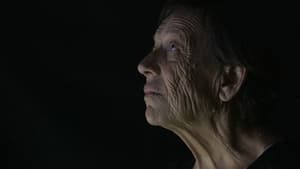
Las cinéphilas
Six elderly retired women, two from Buenos Aires, Argentina; two from Montevideo, Uruguay; and two from Madrid, Spain, have something in common, despite their different interests and lives: they go to the movies almost every day.
2017
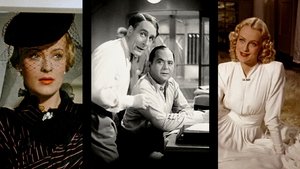
Hitler's Hollywood
Film journalist and critic Rüdiger Suchsland examines German cinema from 1933, when the Nazis came into power, until 1945, when the Third Reich collapsed. (A sequel to From Caligari to Hitler, 2015.)
2017
Locations: Looking for Rusty James
A personal meditation on Rumble Fish, the legendary film directed by Francis Ford Coppola in 1983; the city of Tulsa, Oklahoma, USA, where it was shot; and its impact on the life of several people from Chile, Argentina and Uruguay related to film industry.
2013

This Is Not a Dream
The video revolution of the 1970s offered unprecedented access to the moving image for artists and performers. This Is Not a Dream explores the legacies of this revolution and its continued impact on contemporary art and performance. Charting a path across four decades of avant-garde experiment and radical escapism, This Is Not a Dream traces the influences of Andy Warhol, John Waters and Jack Smith to the perverted frontiers of YouTube and Chatroulette, taking in subverted talk shows and soap operas, streetwalker fashions and glittery magic penises along the way.
2012

The Baader Meinhof Complex
When German police viciously quell a protest against the shah of Iran, popular journalist Ulrike Meinhof rebels against her dishonest marriage, walks away from her children and joins radical anarchist Andreas Baader. Together with Baader's girlfriend, Gudrun Ensslin, they form the violent Red Faction Army, and together perpetrate a slew of terrorist attacks as a way of disrupting the fabric of what they see as an increasingly fascist state.
2008
My Brother Is an Only Child
Accio and Manrico are siblings from a working-class family in 1960s Italy: older Manrico is handsome, charismatic, and loved by all, while younger Accio is sulky, hot-headed, and treats life as a battleground — much to his parents' chagrin. After the former is drawn into left-wing politics, Accio joins the fascists out of spite, but his flimsy beliefs are put to test when he falls for Manrico's like-minded girlfriend.
2007

El Cantante
The rise and fall of salsa singer, Héctor Lavoe (1946-1993), as told from the perspective of his wife Puchi, who looks back from 2002.
2006
Salvador (Puig Antich)
The story of Salvador Puig Antich, one of the last political prisoners to be executed under Franco's Fascist State in 1974.
2006

Hollywood Rated 'R'
A roller-coaster ride through the history of American exploitation films, ranging from Roger Corman's sci-fi and horror monster movies, 1960s beach movies, H.G. Lewis' gore-fests, William Castle's schlocky theatrical gimmicks, to 1970s blaxploitation, pre-"Deep Throat" sex tease films, Russ Meyer's bosom-heavy masterpieces, etc, etc. Over 25 interviews of the greatest purveyors of weird films of all kind from 1940 to 1975. Illustrated with dozens of films clips, trailers, extra footage, etc. This documentary as a shorter companion piece focusing on exploitation king David F. Friedman.
1997

Bandit Queen
Born a lower-caste girl in rural India's patriarchal society, "married" at 11, repeatedly raped and brutalized, Phoolan Devi finds freedom only as an avenging warrior, the eponymous Bandit Queen. Devi becomes a kind a bloody Robin Hood; this extraordinary biographical film offers both a vivid portrait of a driven woman and a savage critique of the society that made her.
1994

Caudillo
Caudillo is a documentary film by Spanish film director Basilio Martín Patino. It follows the military and political career of Francisco Franco and the most important moments of the Spanish Civil War. It uses footage from both sides of the war, music from the period and voice-over testimonies of various people.
1977
Dearest Executioners
This documentary, filmed clandestinely, is based on several interviews with the executioners who worked in Spain during the early 1970s, as well as families of people executed by them.
1977
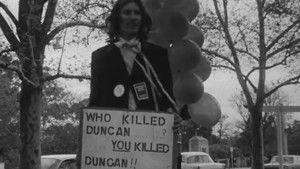
Pride & Snide
A contrast between two kinds of attitudes to gay liberation in Adelaide.
1976
The Society of the Spectacle
Guy Debord's analysis of a consumer society.
1974