Watch A Film Unfinished (2010) Online Free
Yael Hersonski's powerful documentary achieves a remarkable feat through its penetrating look at another film-the now-infamous Nazi-produced film about the Warsaw Ghetto. Discovered after the war, the unfinished work, with no soundtrack, quickly became a resource for historians seeking an authentic record, despite its elaborate propagandistic construction. The later discovery of a long-missing reel complicated earlier readings, showing the manipulations of camera crews in these "everyday" scenes. Well-heeled Jews attending elegant dinners and theatricals (while callously stepping over the dead bodies of compatriots) now appeared as unwilling, but complicit, actors, alternately fearful and in denial of their looming fate.
Cast
Alexander Beyer, Rüdiger Vogler
More Like This
Memory For Burial
Surviving against all odds. In 1940, Benjamin Orenstein, just a teenager, was sent to his first concentration camp in Poland. It was the beginning of a journey that would mark him for life. After years of silence, he now bears witness to one of the darkest chapters in history.
2025
Sélectionné
The incredible story of swimmer Alfred Nakache, played by Amir Haddad. Alfred Nakache is one of those modern-day heroes whose story is little known. Born in Constantine and raised in Toulouse, he was France's best swimmer in the 1940s. Arrested by the Gestapo and then deported, he swam in the unsanitary pools of Auschwitz, from which his wife and daughter never returned. In their memory, this survivor of horror picked himself up and resumed competition until he regained his title as French Champion and once again represented his country at the Olympic Games. Filmed at Studio Marigny at the Théâtre Marigny in Paris's 8th arrondissement.
2023
La Rafle du Vel d'Hiv, la honte et les larmes
In 1942, more than 8,000 Jews were arrested on 16 and 17 July and sent to the Vélodrome d'Hiver sports center in the 15th district, a stone's throw from the Eiffel Tower, before being deported. The expression "Vel d'Hiv round-up" has become part of our collective memory, to the point of becoming the main memorial reference point for France during the dark years. Based on research carried out in unpublished or rarely explored archives, this film retraces the history of this roundup as experienced by hunted Jews and police trackers, from its planning in the Vichy offices to its hour-by-hour unfolding in the streets of Paris.
2022

From Victoria Street to Ang Mo Kio
This work documents a segment of Singapore’s education history –– the survival of the nation’s first Catholic missionary Chinese girls’ school through adversities during her formative years. It is a tribute to the arduous efforts and contributions of a generation of admirable educators who persevered in delivering the education of love with resilience and steadfastness.
2019
Adriana's Pact
Lissette's favorite aunt Adriana, who lives in Australia, is arrested in 2007 while visiting her family in Chile and accused of having worked for dictator Pinochet's notorious secret police, the DINA, and of having participated in the commission of state crimes. When Adriana denies these accusations, Lissette begins to investigate her story in order to film a documentary about her.
2017

Une vie avec Oradour
2011

Lions for Lambs
Three stories told simultaneously in ninety minutes of real time: a Republican Senator who's a presidential hopeful gives an hour-long interview to a skeptical television reporter, detailing a strategy for victory in Afghanistan; two special forces ambushed on an Afghani ridge await rescue as Taliban forces close in; a poli-sci professor at a California college invites a student to re-engage.
2007

The 11th Hour
A look at the state of the global environment including visionary and practical solutions for restoring the planet's ecosystems. Featuring ongoing dialogues of experts from all over the world, including former Soviet Prime Minister Mikhail Gorbachev, renowned scientist Stephen Hawking, former head of the CIA R. James Woolse
2007

The Secret World of Haute Couture
Margy Kinmonth meets millionaire customers and world-famous designers as she explores the anachronistic but little-explained pocket of the fashion industry known as haute couture.
2007
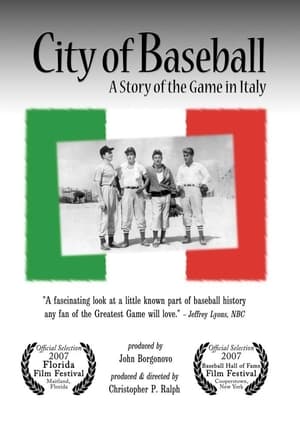
City of Baseball
"City of Baseball" is a documentary that explores both the past and the present of the Italian baseball league in the seaside resort of Nettuno near Rome. Through league pioneers, current players, fans, and local historians, "City of Baseball" captures the story of how the 1944 Allied invasion of Nettuno brought the American pastime to a town which embraced the sport with a passion that continues today.
2007
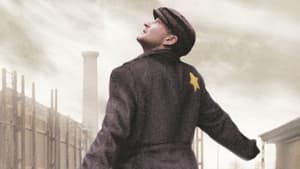
Jakob the Liar
In 1944 Poland, a Jewish shop keeper named Jakob is summoned to ghetto headquarters after being caught out after curfew. While waiting for the German Kommondant, Jakob overhears a German radio broadcast about Russian troop movements. Returned to the ghetto, the shopkeeper shares his information with a friend and then rumors fly that there is a secret radio within the ghetto.
1999
Hearts of Darkness: A Filmmaker's Apocalypse
A chronicle of the production problems — including bad weather, actors' health, war near the filming locations, and more — which plagued the filming of Apocalypse Now, increasing costs and nearly destroying the life and career of Francis Ford Coppola.
1991

How Good to See You Alive
Four years after a military coup overthrew the Brazilian government in 1964, all civil rights were suspended and torture became a systematic practice. Using a mix of fiction and documentary this extraordinary film is a searing record of personal memory, political repression and the will to survive. Interviews with eight women who were political prisoners during the military dictatorship are framed by the fantasies and imaginings of an anonymous character, portrayed by actress Irene Ravache.
1989
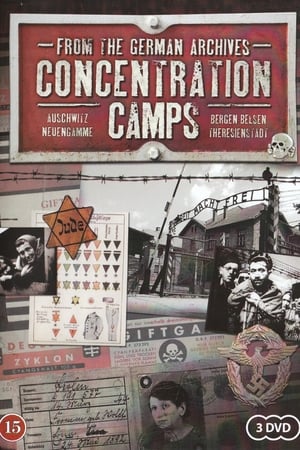
The Liberation of Auschwitz
This chilling, vitally important documentary was produced to mark the 40th anniversary of the liberation of Auschwitz Concentration Camp. The film contains unedited, previously unavailable film footage of Auschwitz shot by the Soviet military forces between January 27 and February 28, 1945 and includes an interview with Alexander Voronsov, the cameraman who shot the footage. The horrifying images include: survivors; camp visit by Soviet investigation commission; criminal experiments; forced laborers; evacuation of ill and weak prisoners with the aid of Russian and Polish volunteers; aerial photos of the IG Farben Works in Monowitz; and pictures of local people cleaning up the camp under Soviet supervision. - Written by National Center for Jewish Film
1986
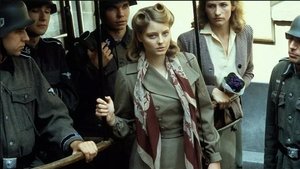
The Blood of Others
In the German-occupied Paris, Helene is torn between the love for her boyfriend Jean, working for the resistance and the German administrator Bergmann, who will do anything to gain her affection.
1984
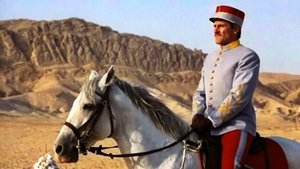
Fort Saganne
In 1911, a willful and determined man from peasant stock named Charles Saganne enlists in the military and is assigned to the Sahara Desert under the aristocratic Colonel Dubreuilh.
1984
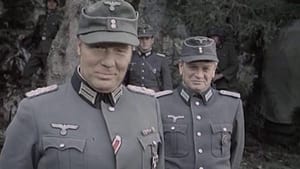
The Peaks of Zelengore
During the Battle of Sutjeska, partisan troops must endure 24 hours of big and heavy attacks on German units Ljubino grave, to the main Partisan units, with the wounded and the Supreme Headquarters, pulled out the ring that is tightened around them.
1976
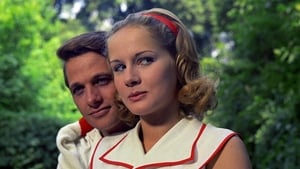
The Garden of the Finzi-Continis
In 1930s Italy, a wealthy Jewish family tries to maintain their privileged lifestyle, hosting friends for tennis and parties at their villa. As anti-Semitism intensifies under Fascism, they must ultimately face the horrors of the Holocaust.
1970
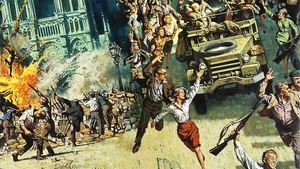
Is Paris Burning?
Near the end of World War II, General Dietrich von Choltitz receives orders to burn down Paris if it becomes clear the Allies are going to invade, or if he's unable to maintain control of the city. After much contemplation, Choltitz ignores orders, enraging the Germans and giving hope to various resistance factions that the city will be liberated. Choltitz, alongside Swedish diplomat Raoul Nordling, helps a leader organise his forces.
1966
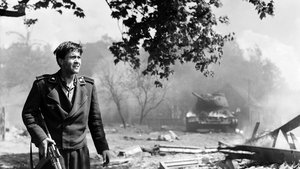
The Adventures of Werner Holt
Two 17-year-olds, Werner Holt and Gilbert Wolzow, are pulled out of school and into Hitler's army. Gilbert becomes a fanatical soldier; but at the front, Werner begins to understand the senselessness of war.
1965