Watch A Fight for (2014) Online Free
A month after the Wall Street occupation, a number of protesters follow their example and set up their tents in front of the Ljubljana stock market. The protesters are united in the critique of representative democracy and global financial capitalism under the slogan ‘nobody represents us’. Their organisation is based on the principles of direct democracy. In absence of other social alternatives, a community starts to emerge in the camp in front of the stock market where everyone has an equal say, and everyone is united in their diversity. After the initial euphoria the great idea of direct democracy clashes against the contemporary individual; antagonisms surface, similar to those of the system which the protesters fight against. The story about the Slovenian version of the ‘occupy’ movement is portrayed with the stories of a few protagonists, who despite several defeats do not lose hope in a different world.
More Like This
대한민국은 국민이 합니다
2026
Emergency Martial Law
2025
1970
Poland, 1970. When popular protests erupt in the streets due to rising prices, the communist government organizes a crisis team. Soon after, the police use their truncheons and then their firearms. The story of a rebellion from the point of view of the oppressors.
2021

GameStop: The Wall Street Hijack
A group of young, risk-embracing day traders used social media to organize a massive stock buy-up. Jordan Belfort provides details about the story, exploring how it shook the world's markets.
2021
Mad Youth
In 2020 the Hungarian government announced the change of ownership at nine state universities in order to make them maintained by foundations. The so-called “restructuring” comprised the imposition of a board of trustees over the universities, the members of which being loyal supporters of the government holding stable positions in its economic halo. Only one of the nine institutions protested against the forced political takeover of the University of Theatre and Film Arts (SZFE). Our film presents one of the stories of the university blockade.
2021
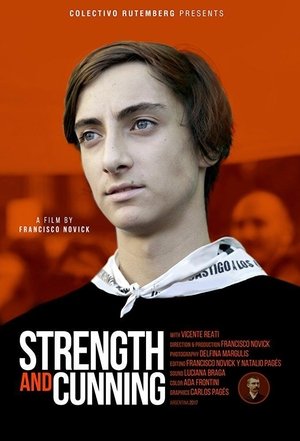
La astucia y la fuerza
2017
The Term. Beginning of a Big Story
The documentary project The Term was conceived in May 2012. When the directing trio commenced mapping the Russian sociopolitical landscape, Vladimir Putin had just settled into the Kremlin for his third term. The original experimental format of “documentary bulletins,” which were published daily online, allowed for wide-ranging content; in the feature film version, however, the filmmakers focused solely on the members of various opposition groups. Nevertheless, the work’s neutral position remains and viewers have to interpret the objectively presented situations for themselves. The main characteristics of this strongly authentic movie include close contact with the protagonists, precise editing, and an effectively controlled release of information.
2014
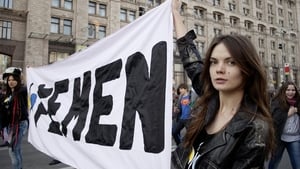
I Am FEMEN
Oxana is a woman, a fighter, an artist. As a teenager, her passion for iconography almost inspires her to join a convent, but in the end she decides to devote her talents to the Femen movement. With Anna, Inna and Sasha, she founds the famous feminist group which protests against the regime and which will see her leave her homeland, Ukraine, and travel all over Europe. Driven by a creative zeal and a desire to change the world, Oxana allows us a glimpse into her world and her personality, which is as unassuming, mesmerising and vibrant as her passionate artworks.
2014
10%: What Makes a Hero?
Award-winning director Yoav Shamir (Defamation, Checkpoint) sets out on an entertaining and insightful international quest, exploring the notion of heroism through a multi-faceted lens. From ordinary heroes to freedom fighters, primates to humans, behavioral scientists to geneticists, even Ayn Rand to Raelians, Shamir leaves no stone unturned, and along the way unveils the fundamental truths of human nature.
2013
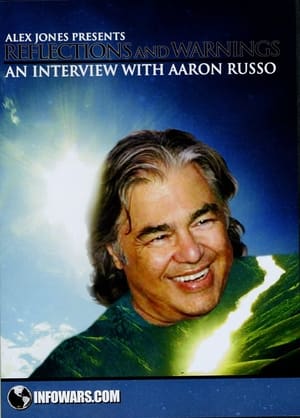
Reflections and Warnings: An Interview with Aaron Russo
In an historic final interview, filmmaker and music promoter Aaron Russo goes in depth on the insider-knowledge given to him by a member of the Rockefeller family. Russo was told– prior to 9/11– of plans to stage terror attacks, invade foreign nations, and kickstart a high-tech police state control grid that would track the populations’ every move with implantable RFID microchips. This information-packed presentation is filled with never-before seen footage. Throughout the film, Alex Jones breaks down the latest activities of the New World Order and how it ties into what Russo predicted.
2009
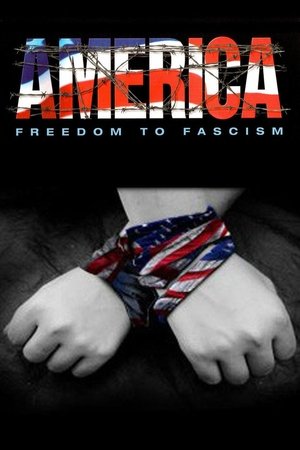
America: Freedom to Fascism
This is a documentary about an honest search for the truth about the Federal Reserve Bank and the legality of the Internal Revenue System. Through extensive interviews with recognised experts and authority, the director shows an astonishing revelation of how the Federal Government and the Bankers have fooled the American public by taking thier wages and putting it in the pockets of the super-rich.
2006
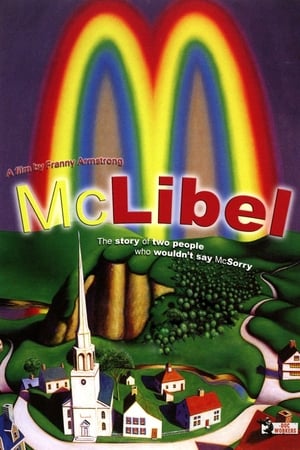
McLibel
McLibel is a documentary film directed by Franny Armstrong for Spanner Films about the McLibel case. The film was first completed, as a 52 minute television version, in 1997, after the conclusion of the original McLibel trial. It was then re-edited to 85 minute feature length in 2005, after the McLibel defendants took their case to the European Court of Human Rights.
2005
Enron: The Smartest Guys in the Room
A documentary about the Enron corporation, its faulty and corrupt business practices, and how they led to its fall.
2005
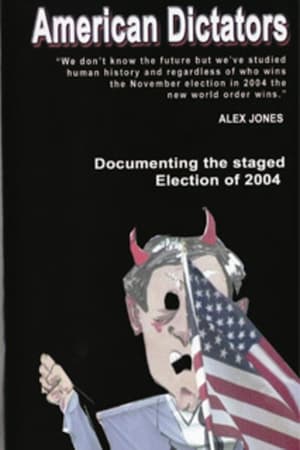
American Dictators: Staging of the 2004 Presidential Election
In Alex Jones' 11th feature documentary, made in 2004, Alex documents the major candidates in the staged 2004 United States presidential election.
2004

Jolly Roger
"Jolly Roger" could mean Roger Schawinski. But by definition, a "Jolly Roger" is the classic black pirate flag with skull and crossbones. This documentary tells the unvarnished story of the Swiss radio pirates who emerged in the 1970s. The focus is on Radio 24 in its wild years, when Schawinski's team broadcast from Italy, with the strongest FM station in the world at the time, straight down from Pizzo Groppera, 130 kilometers all the way to the Zurich area. Supported by numerous original documents from private filmmakers and from the SRG archives, the viewer relives the absurd radio war between David and Goliath that lasted almost four years, 24 years after this war between the radio pirates and the state power began on November 13, 1979. The many known and unknown fighters, who rallied behind their Radio Winkelried Schawinski in 1979 to help usher Switzerland into a new media age, remember the good and bad times, the demonstrations and the numerous threatened and actual closures.
2003

The Corporation
Since the late 18th century American legal decision that the business corporation organizational model is legally a person, it has become a dominant economic, political and social force around the globe. This film takes an in-depth psychological examination of the organization model through various case studies. What the study illustrates is that in the its behaviour, this type of "person" typically acts like a dangerously destructive psychopath without conscience. Furthermore, we see the profound threat this psychopath has for our world and our future, but also how the people with courage, intelligence and determination can do to stop it.
2003
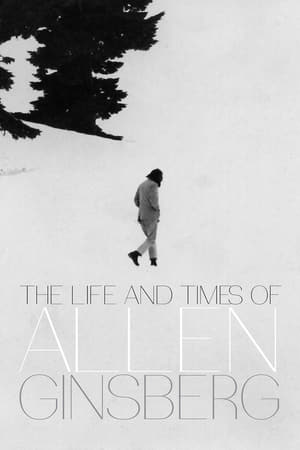
The Life and Times of Allen Ginsberg
Visionary, radical, spiritual seeker, renowned poet, founding member of a major literary movement, champion of human rights, Buddhist, political activist and teacher. Extensive archival footage, interviews, and home movies cover Allen Ginsberg's life, activism, and influence on American culture through the Beat era, the 1960s, and beyond.
1994
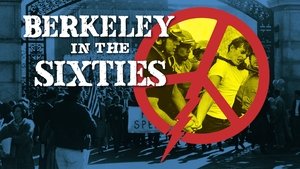
Berkeley in the Sixties
A documentary about militant student political activity at the University of California, Berkeley in the 1960s.
1990
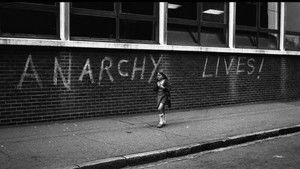
Anarchism in America
A colorful and provocative survey of anarchism in America, the film attempts to dispel popular misconceptions and trace the historical development of the movement. The film explores the movement both as a native American philosophy stemming from 19th century American traditions of individualism, and as a foreign ideology brought to America by immigrants. The film features rare archival footage and interviews with significant personalities in anarchist history including Murray Boochkin and Karl Hess, and also live performance footage of the Dead Kennedys.
1983
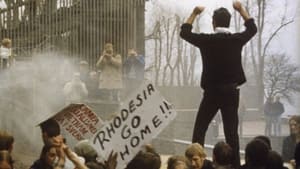
The White Game
Documentary film about the protests against the 1968 Davis Cup tennis match between Sweden and Rhodesia, in Båstad, Sweden. In a series of interviews, demonstrators and members of the Swedish government give their views on sport, politics and civil disobedience.
1968