Watch A Color Print of Edo (1939) Online Free
Loading Cinehub...
The Color Print of Edo is a 1939 black and white Japanese silent film with benshi accompaniment directed by Kazuo Mori. It is a cheerful period drama, sprinkled with comical scenes and tells the story of a loyal and handsome Edo period servant who fights to help his older brother marry the woman he loves. The star of this film, Utaemon Ichikawa, gained enormous popularity for his portrayal of a cheerful and chivalrous man.
Cast
Utaemon Ichikawa, Junzaburō Ban, Yaeko Kumoi, Shinpachirō Asaka, Wakako Kunitomo, Shōzō Nanbu, Taisuke Matsumoto, Eigorō Onoe, Kōichi Katsuragi, Matsuko Miho, Tarô Bandô, Setsuko Kai
More Like This
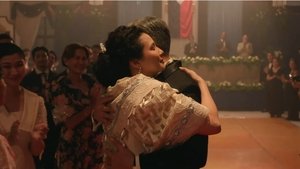
Quezon
A historical drama focusing on Manuel L. Quezon years after the Philippine Revolution during the American occupation. When his fight for independence from the United States is put to the test, Quezon finds himself playing the brutal game of politics to outmaneuver his rivals — including Leonard Wood, Sergio Osmeña, and Joven Hernando. In Quezon’s relentless quest for power, he ultimately faces off with Emilio Aguinaldo in the 1935 presidential elections, using charm and favoritism as both weapons and currency, in a campaign that ultimately changes the face of Philippine politics and history.
2025
三屋清左衛門残日録 完結篇
2017
三屋清左衛門残日録
2016
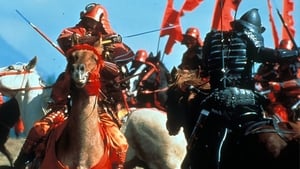
Heaven and Earth
Warlords Kagetora and Takeda each wish to prevent the other from gaining hegemony in feudal Japan. The two samurai leaders pursue one another across the countryside, engaging in massive battles of cavalry and infantry. Younger and less brutal, Kagetora must find the strength to be as brutal as his opponent, but at what cost?
1990
Rikyu
Late in the 1500s, an aging tea master teaches the way of tea to a headstrong Shogun. Through force of will and courageous fighting, Hideyoshi becomes Japan’s most powerful warlord, unifying the country.
1989

Zatoichi: Darkness Is His Ally
Older, wiser but still a wandering loner, the blind, peace-loving masseur Ichi seeks a peaceful life in a rural village. When he's caught in the middle of a power struggle between two rival Yakuza clans, his reputation as a deadly defender of the innocent is put to the ultimate test in a series of sword-slashing showdowns.
1989
Lone Wolf and Cub: White Heaven in Hell
With most of his family already dead at Ogami Itto's hands, Retsudo launches one final plot to destroy him, and when that fails, unleashes the fury of every remaining member of the Yagyu clan.
1974
Lone Wolf and Cub: Baby Cart in the Land of Demons
Ogami Itto is challenged by a quintet of warriors, each armed with one fifth of Ogami's assassin fee and one fifth of the information he needs to complete his assignment.
1973
Lone Wolf and Cub: Baby Cart in Peril
Ogami Itto is hired to kill a tattooed female assassin and battles Retsudo, head of the Yagyu clan, and his son Gunbei.
1972
Lone Wolf and Cub: Baby Cart to Hades
Ogami Itto volunteers to be tortured by Yakuza in order to save a prostitute and is hired by their leader to kill an evil chamberlain.
1972
The Trail of Blood
Can a sinful man change and find peace? It's unlikely in gang-plagued Japan. Jokichi of Mikogami, a drifter (and hired sword), goes straight after protecting a woman in distress: they marry, have a son, and Jokichi pursues his father's craft. After three years, the gangs he embarrassed when he saved his wife find the family and leave Jokichi in grief, vowing revenge. To parry his terrible swift sword, rival gangs join forces, hiring a prostitute to pose as a woman needing help and breaking the code of honor to double cross the drifter. He finds unlikely allies: a thief who aids him for fun and a one-eyed swordsman who may be Jokichi's equal in skill and honor.
1972
Lone Wolf and Cub: Sword of Vengeance
Official Shogunate executioner Ogami Itto has been framed for disloyalty to the Shogunate by the Yagyu clan, against whom he now is waging a one-man war, along with his infant son, Daigoro.
1972
A Wad of Notes
A lone gambler tries to keep a yakuza family from taking over a festival in Kitakyushu. After away from his hometown for 13 years, Ryuji comes back and saves the town that is becoming run-down from yakuza’s ill deeds.
1970
Zatoichi Meets Yojimbo
Zatoichi treks to a village that has always been a favorite spot of his, only to discover that it’s become a living hell, plagued by feuding father and son yakuza as well as the younger crime boss’s bodyguard, scruffy, smart-mouthed, cash-hungry Yojimbo of legend.
1970
Eleven Samurai
The lord of the Oshi fief is killed by his trespassing neighbour, the cruel and despotic Nariatsu, son of the former Shogun. After an investigation, the Oshi clan is blamed for what happened and sentenced to be disbanded. Eleven of the best samurai of the clan refuse the sentence and are willing to give their life for justice.
1967
Zatoichi and the Chest of Gold
Ichi travels to the village of Itakura to pay his respects at the grave of Kichizo, a man he killed two years ago. When some tax money is stolen while in transit to the governor he is accused and sets out to find the money and clear his name.
1964
Jirocho’s Days of Youth: The Youngest Boss in the Tokai Region
He was married to his lover's butterfly and started a new residence. But good things do not last. In his uncle, Uzaemon in Kawashima, Yoshiji Akaji, Yoshimoto's lender, and Kanehira Akagi, the older brother of the former loan of Mishima, played a challenge. It is said to open the ladies' room to the settlement of Wada island. Although Jiro headed to Shigetsugu for arbitration, he was forced to surrender. In such a case, Jiro became chased by Kinpei and others.
1961
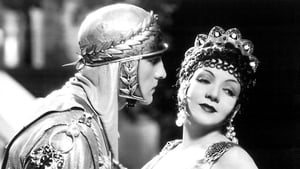
The Sign of the Cross
A Roman soldier becomes torn between his love for a Christian woman and his loyalty to Emperor Nero.
1932
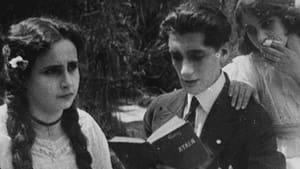
María
María tells the tragic love story of María, a beautiful young woman, and her half brother Efraín, a handsome young man from Valle del Cauca. They both fall in love and live their romance on the farm "El Paraíso", in Valle del Cauca, but not everything is rosy, since Efraín must go to Bogotá because of study reasons leaving María with pain in her soul. Some time later, María becomes ill and Emma tells her brother about the situation.
1922
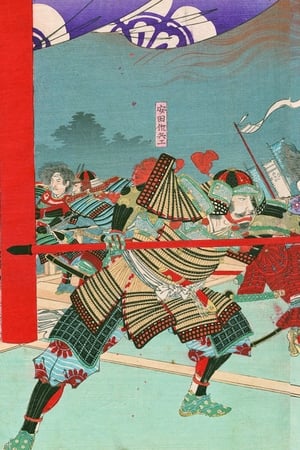
Battle at Honnôji Temple
In 1908, Director/Producer Shozo Makino (father of Japanese cinema) directed and produced the first dramatic film in Kyoto. “Honnô-ji Gassen” was shot at Shinnyo-Do Temple. Considered a lost film.
1908