Watch A Bitter Legacy (2017) Online Free
A sobering look at the brutal treatment of Japanese-Americans before, during, and after WWII as well as the global repercussions that resulted.
More Like This
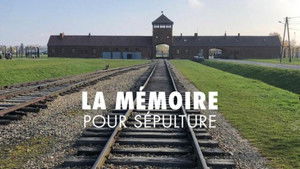
Memory For Burial
Surviving against all odds. In 1940, Benjamin Orenstein, just a teenager, was sent to his first concentration camp in Poland. It was the beginning of a journey that would mark him for life. After years of silence, he now bears witness to one of the darkest chapters in history.
2025
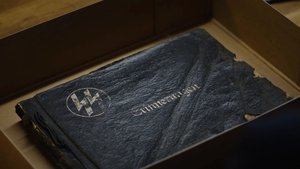
The Lost Album of the SS
In 2016, an album containing 250 previously unseen photos of Nazi officials was discovered in the USA by Stephan Hördler, a prominent Holocaust historian, who immediately understood the album's inestimable value. The album brings together photographs of a "group of friends," all from the same region of Germany, all of whom became SS men. From 1928 to 1943, the photo album allows us to follow their journey. Hördler conducted the investigation, comparing the photos in the album with other, better-known ones, the faces of these men with those of concentration camp officials, and ultimately revealed that it was at Lichtencburg that these young men were trained, a "school" for future camp executioners, and the bonds of camaraderie and informal network that would allow them to help each other, even after the war.
2025

Insurgées ! Les résistantes du ghetto de Varsovie
2023
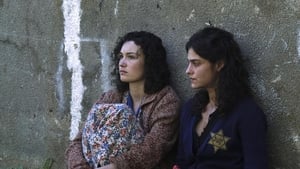
Story of Annette Zelman
1942 Paris. Annette is 20 years old, Jean is barely older, they love each other and the future is bright for them. But the deportation of the Jews of France will change their destiny. Upset at the idea of their only son marrying a Jewish woman, Jean Jausion's parents decide to keep young Annette Zelman away from them... and denounce her to the Gestapo. The machine was launched, but it was too late. Annette was deported to Auschwitz on June 22, 1942.
2022
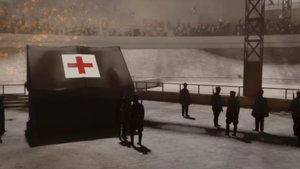
La Rafle du Vel d'Hiv, la honte et les larmes
In 1942, more than 8,000 Jews were arrested on 16 and 17 July and sent to the Vélodrome d'Hiver sports center in the 15th district, a stone's throw from the Eiffel Tower, before being deported. The expression "Vel d'Hiv round-up" has become part of our collective memory, to the point of becoming the main memorial reference point for France during the dark years. Based on research carried out in unpublished or rarely explored archives, this film retraces the history of this roundup as experienced by hunted Jews and police trackers, from its planning in the Vichy offices to its hour-by-hour unfolding in the streets of Paris.
2022

Les Suppliques
Since the defeat, the Nazis, who were the masters of the occupied zone, and the French State, which had been ruling the so-called free zone since Vichy, ordered the Jews to take a census. From the spring of 1941, whether they had been French for several generations or naturalized for a few years, foreigners who had taken refuge in France or stateless people who had been driven out of their country, they were put on file, arrested or threatened at any time. Some wrote to the administration, or directly to Marshal Pétain, who seemed to them to be the last resort. These requests are called Suppliques. Men, women, sometimes children, tried as best they could, by all means, to loosen the trap. They address themselves to their executioners, but they do not know it.
2022
Okinawa/Santos
During World War II, many Japanese immigrants in Santos, Brazil, were forced to move to another place. Matsubayashi draws attention to the fact that 60% of the immigrants were from Okinawa. Based on testimonies from interviewees, this film reveals the hidden historical relationship between Okinawa and Brazil.
2020

The Smuggler and Her Charges
A captivating and personal detective story that uncovers the truth behind the childhood of Michaël Prazan's father, who escaped from Nazi-occupied France in 1942 thanks to the efforts of a female smuggler with mysterious motivations.
2016

Une vie avec Oradour
2011
The Valkyrie Legacy
Created as a companion documentary to the film "Valkyrie," this documentary details the true story behind the plot to assassinate Adolph Hitler.
2008

City of Baseball
"City of Baseball" is a documentary that explores both the past and the present of the Italian baseball league in the seaside resort of Nettuno near Rome. Through league pioneers, current players, fans, and local historians, "City of Baseball" captures the story of how the 1944 Allied invasion of Nettuno brought the American pastime to a town which embraced the sport with a passion that continues today.
2007
The Free French: Unsung Victors
This short film gives background on the Free French movement during World War II.
2006
Francisco Boix: A Photographer in Hell
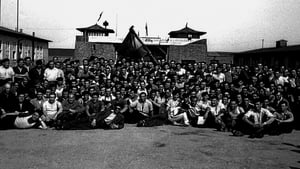
In 1939, just finished the Spanish Civil War, Spanish republican photographer Francesc Boix escapes from Spain; but is captured by the Nazis in 1940 and imprisoned in the Mauthausen concentration camp, in Austria, a year later. There, he works as a prisoner in the SS Photographic Service, hiding, between 1943 and 1945, around 20,000 negatives that later will be presented as evidence during several trials conducted against Nazi war criminals after World War II.
2000

Jesus
Jesus, a carpenter living a simple life, discovers his destiny as the biblical Messiah.
1999
Punitive Damage
The story of New Zealander Helen Todd's law suit against an Indonesian general that she pursued after her son, Kamal, was shot dead in the Dili massacre in East Timor.
1999
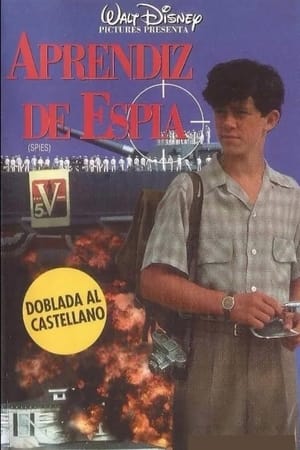
Spies
Long Island, 1942. 12-year-old Harry detects spies everywhere. But suddenly things get serious, as he and two evacuated London kids, Ned and Flo, stumble onto a real adventure. The children end up with America's destiny in their hands.
1993

History and Memory: For Akiko and Takashige
This film is a poetic composition of recorded history and non-recorded memory. Filmmaker Rea Tajiri’s family was among the 120,000 Japanese and Japanese Americans who were imprisoned in internment camps after the attack on Pearl Harbor. And like so many who were in the camps, Tajiri’s family wrapped their memories of that experience in a shroud of silence and forgetting. This film raises questions about collective history – questions that prompt Tajiri to daringly re-imagine and re-create what has been stolen and what has been lost.
1991
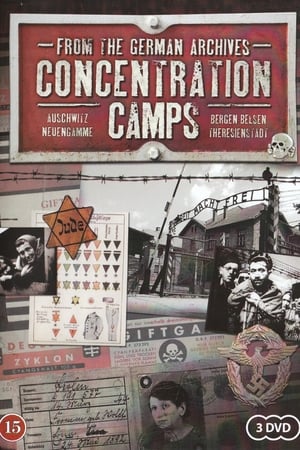
The Liberation of Auschwitz
This chilling, vitally important documentary was produced to mark the 40th anniversary of the liberation of Auschwitz Concentration Camp. The film contains unedited, previously unavailable film footage of Auschwitz shot by the Soviet military forces between January 27 and February 28, 1945 and includes an interview with Alexander Voronsov, the cameraman who shot the footage. The horrifying images include: survivors; camp visit by Soviet investigation commission; criminal experiments; forced laborers; evacuation of ill and weak prisoners with the aid of Russian and Polish volunteers; aerial photos of the IG Farben Works in Monowitz; and pictures of local people cleaning up the camp under Soviet supervision. - Written by National Center for Jewish Film
1986
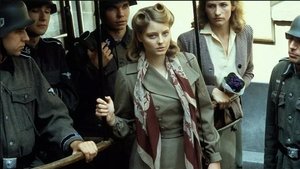
The Blood of Others
In the German-occupied Paris, Helene is torn between the love for her boyfriend Jean, working for the resistance and the German administrator Bergmann, who will do anything to gain her affection.
1984
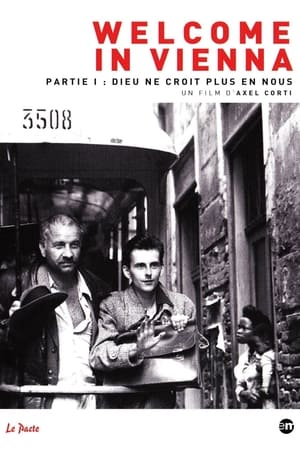
God Does Not Believe in Us Anymore
After his father is murdered by the Nazis in 1938, a young Viennese Jew named Ferry Tobler flees to Prague, where he joins forces with another expatriate and a sympathetic Czech relief worker. Together with other Jewish refugees, the three make their way to Paris, and, after spending time in a French prison camp, eventually escape to Marseille, from where they hope to sail to a safe port.
1982