Watch 4'33" The Movie (2012) Online Free
The climactic scene of John Huston's Key Largo is fused with John Cage's 4'33", all dialogue is stripped away to reveal a cinema of movement, glances and inadvertent comedy.
More Like This

A Castle in Spain
Everyday a father works hard to preserve the fragmentary present. He creates a world of images, a memory room where he meets his daughter. But it is difficult, the pictures are torn and forgotten and the fragmentary landscapes are constantly changing.
2025
The death of the minotavr
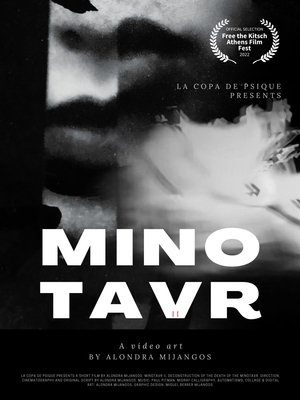
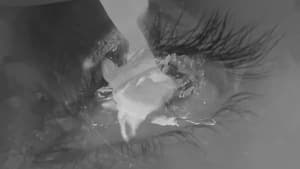
The death of the minotavr talks about the concept of the heroine's journey. Suffering, horror and exhaustion lead the protagonist to a process of transformation, abyss and expiation, because only murdering to minotaur and everything he represents is possible to return to life. From the female gaze, it shows the depth of the emotional wounds caused by domestic violence; the same one that the surrealist Dora Maar lived and that ask why, as a society, instead of killing the minotaur, we blindly continue to send him women only to be devoured and ask them why they simply did not fight, why they did not try get out of the labyrinth.
2022
Collage
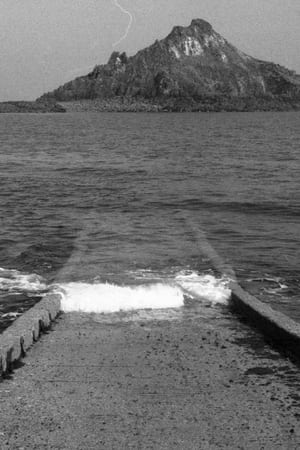
Considerations on collage as a cognitive act in artists’ cinema. A pedagogical film adrift: 35mm photographs and other materials collected over the last fifteen years by artist Stefano Miraglia meet a text written by Baptiste Jopeck and the voice of Margaux Guillemard.
2021

You Will See Me
A five-channel video installation commissioned for the permanent exhibition space at the Australian Centre of the Moving Image (ACMI). “The camera doesn’t just capture us, it frames who we are and how we’re seen. Since the camera became more accessible in the mid-20th century, artists and amateurs alike have turned the lens on themselves to create a stage both private and public. This tradition is continued, amplified and transformed through reality TV, the internet and social media, the latest forms to use straight-to-camera techniques to share our common humanity, project authenticity and illuminate how a sense of self can be constructed through the moving image.”
2021
EMPATHY (a digital love letter)
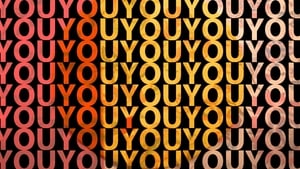
EMPATHY (a digital love letter) is a short essay documentary, a heartbreaking comedy about a break-up, an attempt to concretize emotion and evoke empathy from a writer’s approach. After getting her heart crushed in a relationship, a woman writes a letter to the man she loves for a simple reason—to evoke his empathy towards her. Knowing the premise of human emotions, the woman starts her letter with her own life stories, follows with a blunt confession of affection, and ends with a cursing when she can’t handle the emotions anymore.
2017
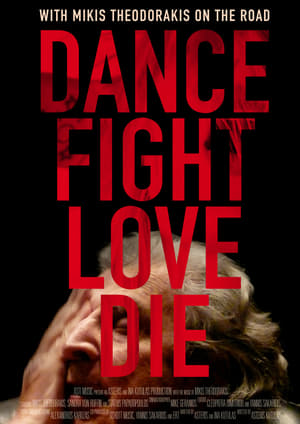
Dance Fight Love Die: With Mikis On the Road
An intimate look into the life of composer Mikis Theodorakis from 1987 until 2017: comprising three decades, four continents, 100 locations and 600 hours of film material. The film interweaves personal moments with archive footage, documentary recordings and fictional pieces, all accompanied by Theodorakis’ music in jazz, classic, electro and rap versions.
2017

RiP!: A Remix Manifesto
RiP!: A Remix Manifesto is a 2008 open source documentary film about the "the changing concept of copyright" directed by Brett Gaylor.
2008
Freshman Psych
A sociopath gathers and drugs groups of college students to bring out their existing suicidal tendencies to the surface then walks among them to enjoy and record their deaths.
2008
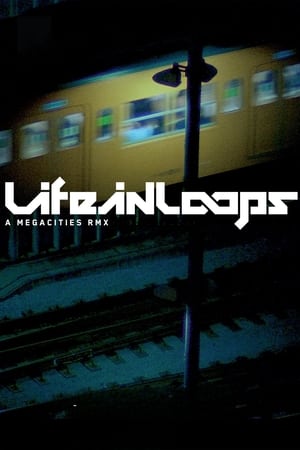
Life in Loops (A Megacities RMX)
Timo Novotny labels his new project an experimental music documentary film, in a remix of the celebrated film Megacities (1997), a visually refined essay on the hidden faces of several world "megacities" by leading Austrian documentarist Michael Glawogger. Novotny complements 30 % of material taken straight from the film (and re-edited) with 70 % as yet unseen footage in which he blends original shots unused by Glawogger with his own sequences (shot by Megacities cameraman Wolfgang Thaler) from Tokyo. Alongside the Japanese metropolis, Life in Loops takes us right into the atmosphere of Mexico City, New York, Moscow and Bombay. This electrifying combination of fascinating film images and an equally compelling soundtrack from Sofa Surfers sets us off on a stunning audiovisual adventure across the continents. The film also makes an original contribution to the discussion on new trends in documentary filmmaking.
2006
Selbstportrait 1
2005

Tribulation 99: Alien Anomalies Under America
Baldwin’s “pseudo-pseudo-documentary” presents a factual chronicle of US intervention in Latin America in the form of the ultimate conspiracy theory, combining covert action, environmental catastrophe, space aliens, cattle mutilations, killer bees, religious prophecy, doomsday diatribes, and just about every other crackpot theory broadcast through the dentures of the modern paranoiac.
1991
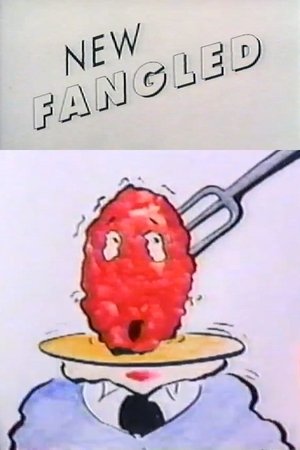
New Fangled
A critique of marketing speak in the commercial cartoon industry.
1990
Blue Peanuts
A pre-internet mash-up that mixes “Peanuts” and David Lynch’s “Blue Velvet.”
1987
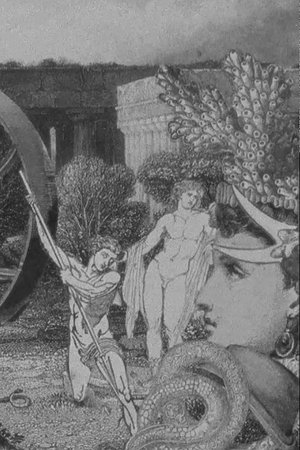
Ancestors
Ancestors is a film about spiritual forefathers and mothers in a purely fanciful sense. These are classical figures, anatomical figures, fairy tale figures and romantic figures all thrown in together - all my creative root-sources, in a kind of playful tribute. Like part 2 of Duo Concertantes, it's a moving single picture, now doubled.
1978
Wonderland
A visual poetic collage and a place of joy. Awaiting the decision from here to there.
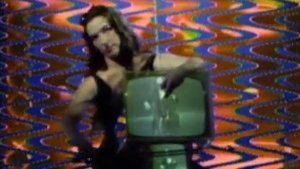
Global Groove
Global Groove was a collaborative piece by Nam June Paik and John Godfrey. Paik, amongst other artists who shared the same vision in the 1960s, saw the potential in the television beyond it being a one-sided medium to present programs and commercials. Instead, he saw it more as a place to facilitate a free flow of information exchange. He wanted to strip away the limitations from copyright system and network restrictions and bring in a new TV culture where information could be accessed inexpensively and conveniently. The full length of the piece ran 28 minutes and was first broadcasted in January 30, 1974 on WNET.
1973
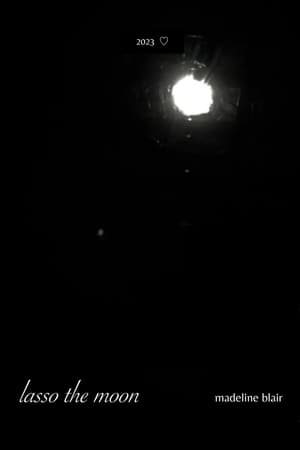
lasso the moon
a sentimental audiovisual collage from december 2023

Jaan Tere Naam
Lovely Pinky Malhotra is a heart-breaker in the college where she studies, and has a number of young men who would lay down their lives for her. Amongst them are Sunil and Vicky. She is attracted to Sunil, and both carry on a romantic relationship, hoping to get married after finishing college. Before that could happen, Pinky finds out that Sunil has been two-timing her as he is already dating another young collegian. Angered and hurt at this, she decides she will have nothing to do with him, and starts her romance with Vicky. Sunil, who does not know what has transpired, wants to talk to Pinky with a view of rekindling their romance, but Pinky refuses to speak with him. The question remains is Sunil really in love with another girl, and if so, why did he take the trouble to woo Pinky?
1992
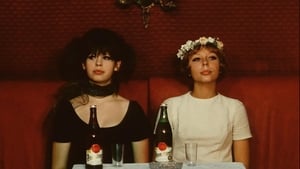
Daisies
Two teenage girls embark on a series of destructive pranks in which they consume and destroy the world around them.
1966