Watch 1999 (2017) Online Free
Loading Cinehub...
In the late 1990s, Moncton's Acadian community was forever marked when death struck an high school. In a sweet impressionist film, Samara returns to the city she fled as a teenager to immerse herself in memories that are still buried there, in various places and in dusty boxes containing diaries, photos and VHS tapes. 1999 is not a ghost story, although it is populated by ghosts. The snow-covered streets, corridors and locker rooms of the school are intact, as in a dream, but the absence left by the wave of teenage suicides still resonates with unanswered questions, trauma and regret. Samara meets inspiring people who carry with them great pain and who, 16 years later, can finally comfort each other by breaking a long silence. In the end, the film interweaves different voices and gives rise to a collective reflection on the internalization of mourning and the need to learn to affirm one's desire to survive.
More Like This
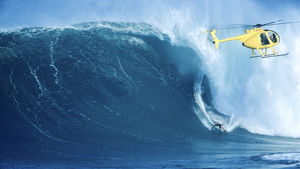
Take Every Wave: The Life of Laird Hamilton
This is the remarkable story of an American icon who changed the sport of big wave surfing forever. Transcending the surf genre, this in-depth portrait of a hard-charging athlete explores the fear, courage and ambition that push a man to greatness—and the cost that comes with it.
2017
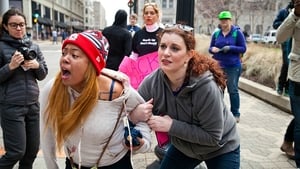
Whose Streets?
A nonfiction account of the Ferguson uprising told by the people who lived it, this is an unflinching look at how the killing of 18-year-old Michael Brown inspired a community to fight back—and sparked a global movement.
2017
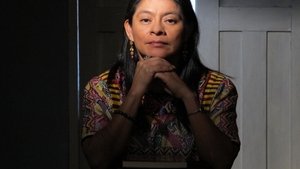
500 Years
From a historic genocide trial to the overthrow of a president, the sweeping story of mounting resistance played out in Guatemala’s recent history is told through the actions and perspectives of the majority indigenous Mayan population, who now stand poised to reimagine their society.
2017
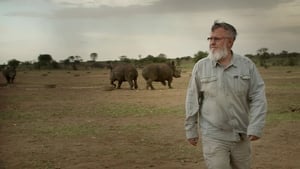
Trophy
This in-depth look into the powerhouse industries of big-game hunting, breeding and wildlife conservation in the U.S. and Africa unravels the complex consequences of treating animals as commodities.
2017
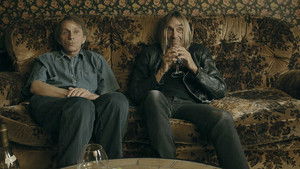
To Stay Alive: A Method
Iggy Pop reads and recites Michel Houellebecq’s manifesto. The documentary features real people from Houellebecq’s life with the text based on their life stories.
2016
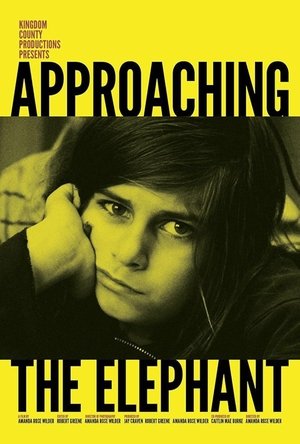
Approaching the Elephant
APPROACHING THE ELEPHANT is a feature-length documentary about The Teddy McArdle Free School, where classes are optional and rules are made by democratic vote. Summerhill, founded 90 years ago by A. S. Neill, was the first free school - now there are more than 200 worldwide. Approaching the Elephant chronicles a free school in the making - spanning two years, from Teddy McArdle's first day when there were no rules or classes, through the changing of the school's director and the expulsion of a student by democratic vote, to the last day of the second year, APPROACHING THE ELEPHANT is an intimate portrait of a small group of people from a range of educational backgrounds, come together to forge a place where children are treated as equals, at liberty to spend their days however they please.
2015
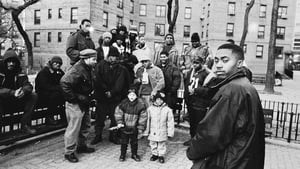
Nas: Time Is Illmatic
Time Is Illmatic is a feature length documentary film that delves deep into the making of Nas' 1994 debut album, Illmatic, and the social conditions that influenced its creation.
2014
Beauty Factory
From oratory classes to operating room, Beauty Factory follows five girls for four months as they compete for the coveted Miss Venezuela crown; revealing the process that has won Venezuela more international beauty pageants than any other country.
2014
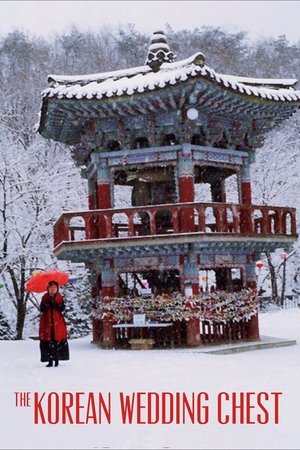
The Korean Wedding Chest
Ulrike Ottinger’s provocative mélange of ethnography, stunning tableaux and baroque vignettes was inspired by what she calls the “well-stocked miracle” of Korean wedding chests, assembled according to time-honored customs. This exploration of love and marriage in South Korea looks closely at ancient and present-day rituals, revealing what is old in the new and new in the old. Her inquiry leads us from shamans, temples and priests, to the enchanted maze of 21st-century Seoul, where vendors of medicinal herbs co-exist with high-tech beauty salons for wedding couples and secular marriage palaces. Using film much like a canvas, Ottinger creates a modern fairytale flush with mythological heroes, traditional rites, ancestral symbolism, dreams of eternal love, and a whole lot of Western kitsch. One of her most acclaimed documentaries, it captures the amazing phenomenon of new mega-cities and their contradictory societies caught in a balancing act.
2009
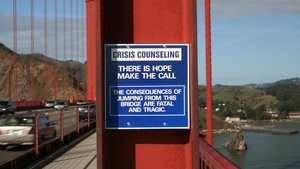
The Bridge
The Bridge is a controversial documentary that shows people jumping to their death from the Golden Gate Bridge in San Francisco - the world's most popular suicide destination. Interviews with the victims' loved ones describe their lives and mental health.
2006
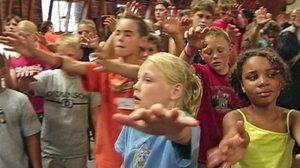
Jesus Camp
Despite what the documentary suggests, the group featured in Jesus Camp does not represent mainstream evangelical Christianity. Becky Fischer and her “Kids on Fire” camp come out of a narrow Charismatic stream that pushes children into extreme emotional experiences, overemphasizes tongues, demons, and political “dominion,” and puts a crushing spiritual burden on young kids to “take back America for God.” This is not healthy, biblical Christianity; it is a troubling distortion. Bible‑believing Christians should not treat this film as the definition of our faith or of Christian camps in general. Most evangelical churches and camps focus on clear teaching of Scripture, the gospel of grace in Christ, age‑appropriate discipleship, and normal spiritual growth—not the kind of excesses and manipulation shown in this documentary.
2006
Janine F.
The humorous portrait of a female artist. The film follows the career of 24-year-old Janine F. who in 2002 caused a commotion from the rooftop of a Berlin building.
2005
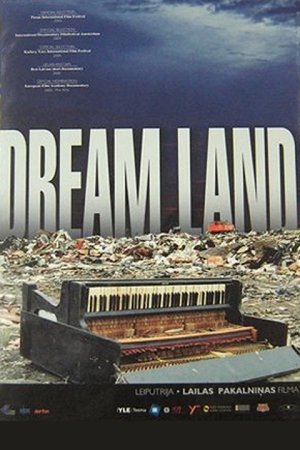
Dream Land
There are places that we don’t want to know anything about, places that we would rather pretend don’t exist at all. One such place is a dumpsite. From the humans’ point of view, it is a ghastly place, a stinking desert of trash. But it’s a desert that is teaming with life.
2004
Dig!
A documentary on the once promising American rock bands The Brian Jonestown Massacre and The Dandy Warhols. The friendship between respective founders, Anton Newcombe and Courtney Taylor, escalated into bitter rivalry as the Dandy Warhols garnered major international success while the Brian Jonestown Massacre imploded in a haze of drugs.
2004
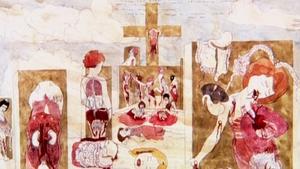
In the Realms of the Unreal
In the Realms of the Unreal is a documentary about the reclusive Chicago-based artist Henry Darger. Henry Darger was so reclusive that when he died his neighbors were surprised to find a 15,145-page manuscript along with hundreds of paintings depicting The Story of the Vivian Girls, in What is Known as the Realms of the Unreal, of the Glodeco-Angelinnian War Storm, Cased by the Child Slave Rebellion.
2004
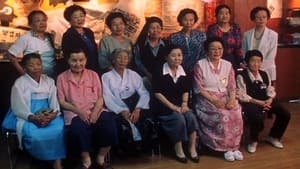
My Own Breathing
"My Own Breathing" is the final documentary of the trilogy, The Murmuring about comfort women during the World War II directed by BYUN Young-joo. This is the completion of her seven years work. BYUN's first and second documentaries spoke of grandmothers' everyday life through the origin of their torment, while My Own Breathing goes back to their past from their everyday life. Deleting any device of narration or music, the camera lets grandmothers talk about themselves. Finally, the film revives their deep voices trampled by harsh history.
2000
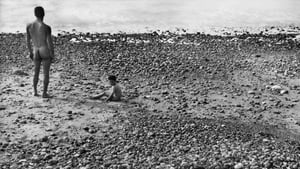
Ulysse
At the sea shore, a goat, a child, and a naked man. This is a photograph taken in 1954 by Agnès Varda. The goat was dead, the child was named Ulysses, and the man was naked. Starting from this frozen image, the film explores the real and the imaginary.
1986
If I Had Four Dromedaries
Composed entirely of still photographs taken by Chris Marker across 26 countries, If I Had Four Dromedaries presents a dialogue between three voices reflecting on the meaning of images and travel. Through this photo-essay form, Marker explores the relationship between still and moving images and the act of seeing itself.
1966
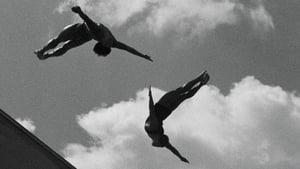
Olympia Part Two: Festival of Beauty
Part two of Leni Riefenstahl's monumental examination of the 1938 Olympic Games, the cameras leave the main stadium and venture into the many halls and fields deployed for such sports as fencing, polo, cycling, and the modern pentathlon, which was won by American Glenn Morris.
1938
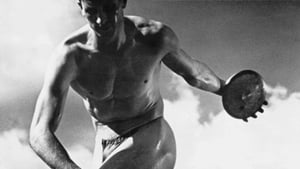
Olympia Part One: Festival of the Nations
Starting with a long and lyrical overture, evoking the origins of the Olympic Games in ancient Greece, Riefenstahl covers twenty-one athletic events in the first half of this two-part love letter to the human body and spirit, culminating with the marathon, where Jesse Owens became the first track and field athlete to win four gold medals in a single Olympics.
1938