Watch 1964 (2014) Online Free
1964 was the year the Beatles came to America, Cassius Clay became Muhammad Ali, and three civil rights workers were murdered in Mississippi. It was the year when Berkeley students rose up in protest, African Americans fought back against injustice in Harlem, and Barry Goldwater’s conservative revolution took over the Republican Party. In myriad ways, 1964 was the year when Americans faced choices: between the liberalism of Lyndon Johnson or Barry Goldwater’s grassroots conservatism, between support for the civil rights movement or opposition to it, between an embrace of the emerging counterculture or a defense of traditional values.
Cast
Oliver Platt
More Like This
Black Power: A British Story of Resistance
An examination of the Black Power movement in the late 1960s in the UK, surveying both the individuals and the cultural forces that defined the era. At the heart of the documentary is a series of astonishing interviews with past activists, many of whom are speaking for the first time about what it was really like to be involved in the British Black Power movement, bringing to life one of the key cultural revolutions in the history of the nation.
2021
Storming the Capitol: The Inside Story
Captures the incident of January 6, 2021, when scores of Trump supporters clashed with police, interrupting a constitutional process by Congress to affirm the victory of the then President-elect Biden and Vice President-elect Kamala Harris in the election.
2021
Deconstructing the Beatles' Abbey Road: Side 2
Abbey Road is a masterpiece filled with such classic Beatles songs as “Come Together,” “Something,” and “Here Comes the Sun.” Deconstructing the Beatles’ Abbey Road: Side Two takes a track-by-track journey into their inspiration and evolution in the studio with the man who’s been presenting his beloved, exhilarating multimedia deep dives into the band’s work here for years. Because of the depth of the Abbey Road songwriting, he created two separate presentations for this album.
2019
1968: A Year of War, Turmoil and Beyond
The Tet Offensive during the Vietnam War, the Civil Rights Movement, the May events in France, the assassinations of Martin Luther King and Robert F. Kennedy, the Prague Spring, the Chicago riots, the Mexico Summer Olympics, the presidential election of Richard Nixon, the Apollo 8 space mission, the hippies and the Yippies, Bullitt and the living dead. Once upon a time the year 1968.
2018
François Hollande, le mal-aimé
2017
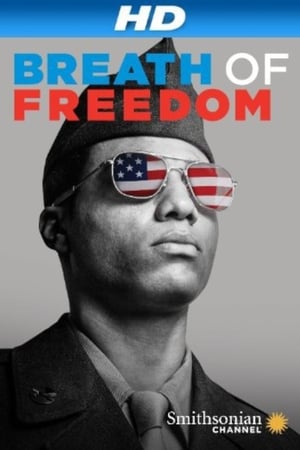
Breath of Freedom
In World War II. African-American GIs liberate Germany from Nazi rule while racism prevailed in their own army and home country. Returning home they continue fighting for their own rights in the civil rights movement.
2014
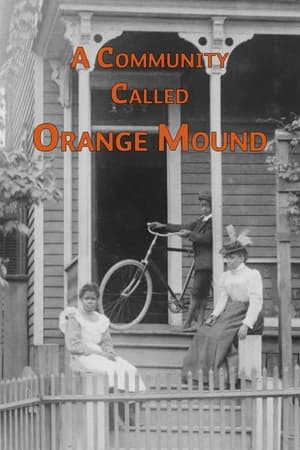
A Community Called Orange Mound
Orange Mound is a southeast Memphis neighborhood with a surprising legacy. With roots going back to the time of plantations and slavery, Orange Mound grew at the end of the nineteenth century out of the remains of that defunct way of life. It was one of the first communities in the United States to be built entirely by and for African Americans.
2013
Milk
The true story of Harvey Milk, the first openly gay man ever elected to public office. In San Francisco in the late 1970s, Harvey Milk becomes an activist for gay rights and inspires others to join him in his fight for equal rights that should be available to all Americans.
2008
W.
The story of the eventful life of George W. Bush—his struggles and triumphs, how he found both his wife and his faith—and the critical days leading up to his decision to invade Iraq.
2008
Fahrenheit 9/11
Michael Moore's view on how the Bush administration allegedly used the tragic events on 9/11 to push forward its agenda for unjust wars in Afghanistan and Iraq.
2004
The Assassination of Richard Nixon
It’s 1974 and Sam Bicke has lost everything. His wife leaves him with his three kids, his boss fires him, his brother turns away from him, and the bank won’t give him any money to start anew. He tries to find someone to blame for his misfortunes and comes up with the President of the United States who he plans to murder.
2004
Jack Paar: Smart Television
PBS documentary examining the work of Jack Paar.
2003
The Fog of War
Using archival footage, cabinet conversation recordings, and an interview of the 85-year-old Robert McNamara, The Fog of War depicts his life, from working as a WWII whiz-kid military officer, to being the Ford Motor Company's president, to managing the Vietnam War as defense secretary for presidents Kennedy and Johnson.
2003
Vote for Henryk!
German national election campaign 2002: Henryk Wichmann from the conservative party is fighting a lost battle in the Uckermark.
2003
Thirteen Days
The story of the Cuban Missile Crisis in 1962—the nuclear standoff with the USSR sparked by the discovery by the Americans of missile bases established on the Soviet-allied island of Cuba.
2000

Mondo Ford
Dir. Scott Calonico's film purports to solve the assassination of President Kennedy, pointing the finger at President Gerald Ford...as well as bigfoot, Stonehenge, pyramids, and extraterrestrials.
2000
Malcolm X
A tribute to the controversial black activist and leader of the struggle for black liberation. He hit bottom during his imprisonment in the '50s, he became a Black Muslim and then a leader in the Nation of Islam. His assassination in 1965 left a legacy of self-determination and racial pride.
1992

JFK
Follows the investigation into the assassination of President John F. Kennedy led by New Orleans district attorney Jim Garrison.
1991
The Travelling Players
A traveling theatre troupe tours the Greek countryside from 1939 to the early 1950s, staging “Golfo the Shepherdess”. As the years pass, its members endure persecution, betrayal, executions, and exile. Their personal stories become entangled with the country’s major historical events, in a seemingly endless cycle of violence and loss.
1975
Viva Zapata!
The story of Mexican revolutionary Emiliano Zapata, who led a rebellion against the corrupt, oppressive dictatorship of president Porfirio Díaz in the early 20th century.
1952